Key takeaways
- Authority backlinks are links from sites that Google already trusts, shown by their own strong, real backlink profiles.
- A high DA or DR number is a shortcut, not proof: metrics can be inflated, so check the links behind the number.
- “High PR backlinks” is an old phrase from the days of public PageRank; today it simply means links from strong, trusted domains.
- One link from a powerful page usually beats dozens of weak ones, as long as the page is indexed and the link sits in real content.
- You can earn authority links slowly with content and outreach, or order them from a vetted source to save months.
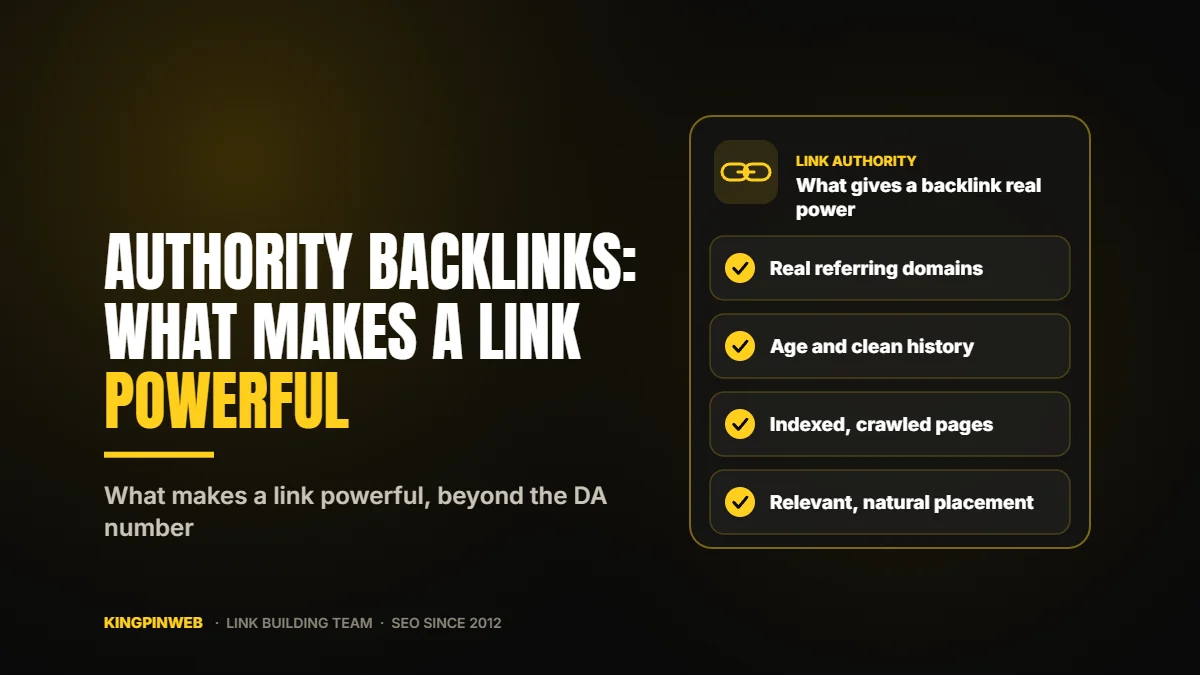
Authority backlinks are links from websites that search engines already trust. That trust comes from the site’s own history: real links pointing to it, years of age, clean content and pages that Google crawls and indexes often. When a site like that links to you, part of that trust flows your way.
The catch is that “authority” is easy to fake on paper. In this guide we explain what really makes a link powerful, how high authority backlinks differ from links that only look strong, and how to get them without wasting money.
If you are new to the topic, start with our complete beginner guide to backlinks, then come back here.
What are high authority backlinks?
A high authority backlink is a link from a domain that has earned a strong position in Google’s eyes. Usually that means the domain has many referring domains of its own, a long and clean history, and pages that rank or get crawled regularly.
The link passes value because Google’s ranking systems still treat links as votes. A vote from a trusted, well linked site counts for far more than a vote from a brand new blog with no links at all.
So when people ask “what are high domain authority backlinks”, the honest answer is this: links from sites with real, earned strength. The DA score is only one way of estimating that strength.
Backlinks and domain authority: what the number really tells you
Domain Authority (Moz DA) and Domain Rating (Ahrefs DR) are third party scores. Google does not use them. They try to predict how strong a domain is, mostly by counting and weighing the links pointing to it.
That makes them useful for a quick filter, but they have weak spots:
- They can be inflated. Spammy link blasts can push a DA up without adding any real trust.
- They are domain wide. A strong domain can still have a weak, orphaned page where your link lands.
- They lag. A site that lost its best links months ago may still show a high score.
In our experience, Moz Spam Score, Trust Flow and Citation Flow are even poorer guides. We judge a domain by its real backlinks, its age, its clean history and whether its pages are indexed. A DA 25 site with 300 genuine referring domains often passes more power than a DA 50 site built on junk.
What makes a link powerful: the signals that matter
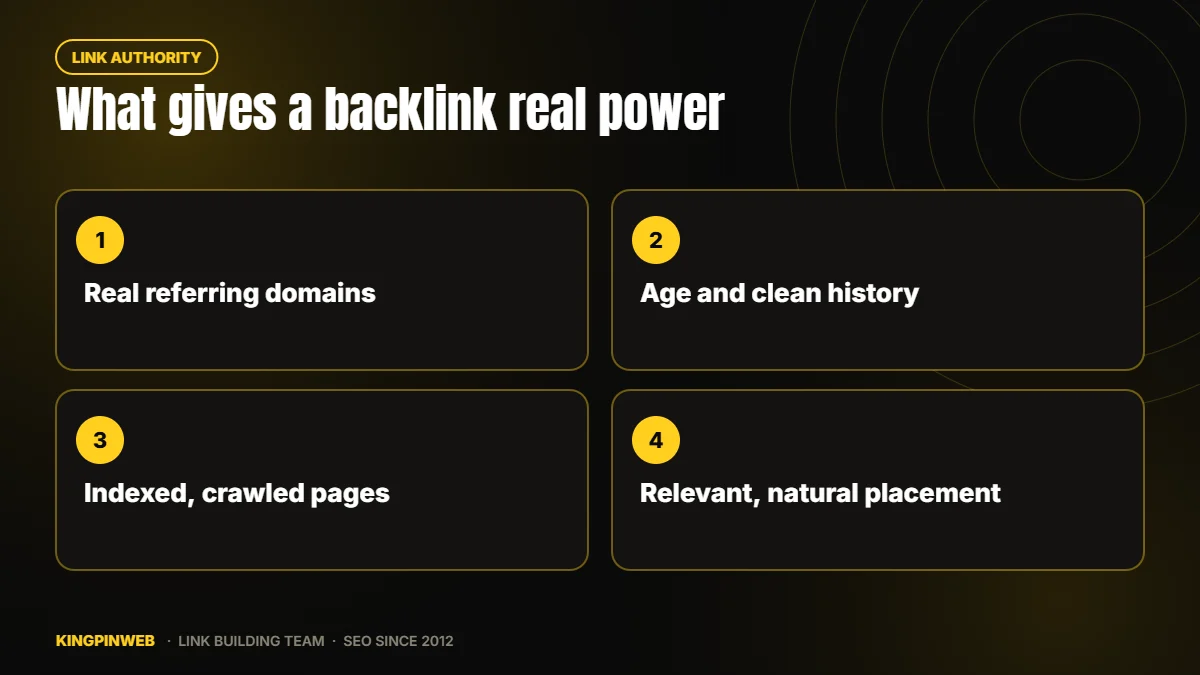
When we vet a site for a client link, these are the signals we weigh most.
| Signal | What to look for | Red flag |
|---|---|---|
| Referring domains | Many unique sites linking in, from varied sources | Thousands of links from a handful of domains |
| Domain age and history | Years of continuous, on topic use | Past life as a casino, pharma or spam site |
| Indexing | Pages show up in Google and get crawled | Large parts of the site not indexed |
| Placement | Link inside a real, readable article | Footer, sidebar or “sponsored links” block |
| Outbound links | A modest number per page | Pages stuffed with dozens of unrelated links |
| Traffic | Some steady organic visitors | Zero traffic despite a high score |
No single signal decides it. A powerful link usually ticks most of these boxes at once.
High PR backlinks: an old term that still gets searched
Years ago Google showed a public PageRank score from 0 to 10. SEOs chased “high PR backlinks” because a PR 6 link looked far better than a PR 1 link.
Google stopped updating that public score long ago, but PageRank itself still exists inside its systems. So when people search “how to get high PR backlinks” today, they really mean links from trusted domains with strong link profiles. Anyone selling “PR 9 links” now is selling a number nobody can check, which is a good reason to walk away.
Do backlinks build authority for your own site?
Yes. Backlinks build authority over time because every strong link adds to your site’s own link profile. As that profile grows, new pages rank faster, and existing pages hold their positions more firmly.
It works best when the links come in at a natural pace and from varied sources: a mix of guest posts, niche edits, PBN links and foundation links, with sensible anchor text. A sudden burst of links from one type of source looks unnatural, even if each link is strong.
Most sites we work with see ranking movement in one to three months after authority links start landing, depending on competition and how much the site already has.
How to get authority backlinks
There are two broad paths, and most serious sites use both.
Earn them
- Publish data, tools or guides other sites want to cite.
- Pitch journalists and bloggers who cover your topic.
- Build relationships with sites in your industry over time.
Earned links are great, but slow and unpredictable. A strong piece can take months of outreach to collect a handful of links.
Order them from a vetted source
This is the faster path, and it is where most businesses and agencies end up. You choose the type of link, send your URLs and anchors, and the placements are done for you on sites that have already been checked.
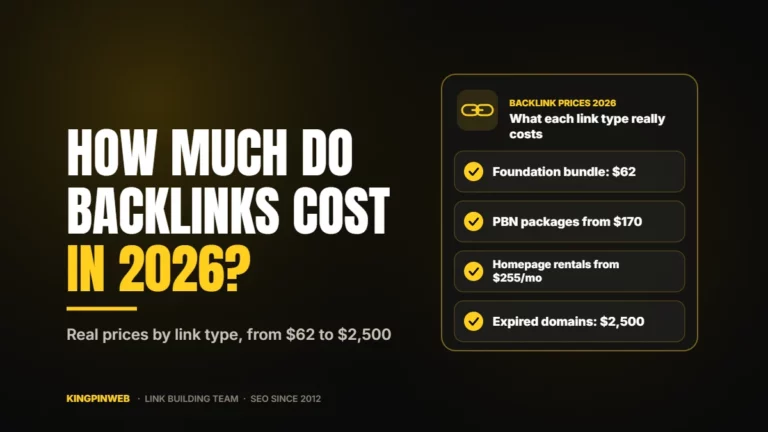
Our link building services are built around this. For example, our strongest PBN links sit on sites with Moz DA 50+ and 100+ referring domains, each inside a handwritten article. If budget is the main question, our breakdown of how much backlinks cost shows what to expect at each level.
How to boost backlink authority you already have
The links already pointing to you can often pass more value with a little care:
- Make sure the linking pages are indexed. A link on a page Google never sees passes nothing.
- Fix broken target pages. Links pointing to 404 pages waste their value; redirect them to the right page.
- Support strong links with tier two links. Foundation links pointing at your best guest posts help Google find and trust them.
- Link internally from pages that hold authority. Pass strength from your most linked pages to the ones you want to rank.
FAQ
Is one authority backlink better than many weak ones?
Usually yes. One link from a trusted, indexed page often moves rankings more than fifty links from thin sites, and it carries far less risk.
Should every backlink be from a high DA site?
No. A natural profile includes some smaller sites too. Mixing strong links with lower level foundation links looks normal to Google and supports your main links.
How long does an authority link take to work?
Google first has to crawl and index the linking page, which can take days or weeks. Ranking effects usually show over the following one to three months.
Do you share the live URLs of PBN links?
We report every placement in an Excel report, but PBN live URLs are kept private to protect the network. Reports never carry our name or logo, so agencies can pass them on.
Ready to add links with real authority?
If you want powerful links without months of outreach, browse our full range of backlink services and pick the level that fits your goals. Need a custom mix or help choosing? Talk to our team and we will suggest a plan.
About the author

KINGPINWEB Team
KINGPINWEB is an SEO and link building company based in Chennai, India. Since 2012 our in-house team has helped site owners, agencies and businesses rank higher in search. Everything we publish here comes from hands-on work: campaigns we run, rankings we track every day and tests we carry out ourselves. We write these guides to share what works in practice. Our team is led by co-founders Issac M. Paul and Balaji Ragupathi.