
Key takeaways
- A backlink exchange is an agreement where two or more sites link to each other to boost rankings.
- Google’s guidelines name excessive link exchanges as a link scheme; occasional natural cross links are normal.
- Three way (ABC) swaps and exchange networks hide the pattern, but they leave footprints that are easy to spot at scale.
- The biggest hidden cost is control: you give away links from your own site to sites you cannot vet over time.
- Vetted placements you order and check are a cleaner way to grow links without tying your site to strangers.
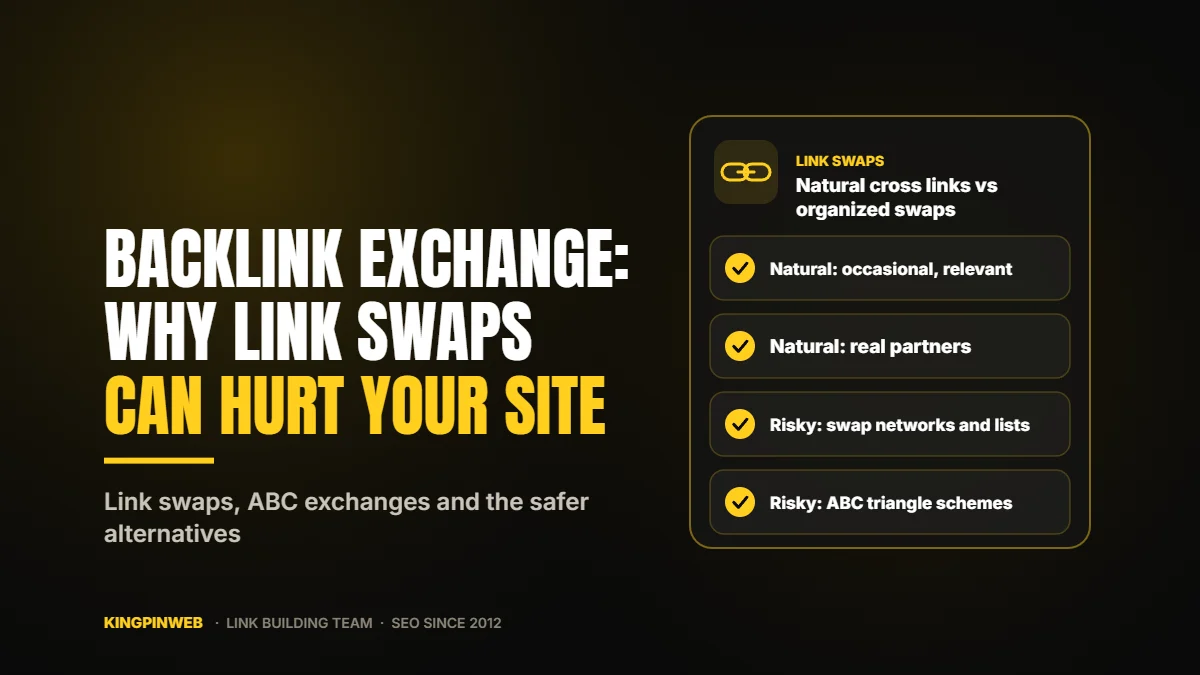
A backlink exchange is a deal where sites agree to link to each other. In its simplest form, site A links to site B and site B links back. More complex versions involve three sites, or whole networks and platforms where members trade links for credits.
Link swaps look free, which is why they stay popular. But large scale link swaps are one of the patterns Google’s guidelines call out by name, and the costs show up later. Here is how exchanges work, where the line sits between normal cross linking and a scheme, and what we recommend instead.
How a backlink exchange works
There are three common setups.
Direct (reciprocal) exchange
Two site owners agree to link to each other, usually from a blog post or a resources page. It is quick to arrange and easy to see: each site links to the other.
Three way or triangular exchange (ABC)
To hide the swap, site A links to site C, and in return site B (owned by the same person as C, or by a partner) links to site A. Nobody links back directly, so the trade is less obvious on the surface.
Exchange networks and platforms
Members join a group or platform, add their sites, and earn credits by placing links for others. They spend those credits to get links back. Some run as private groups, some as paid platforms with dashboards and site lists.
For background on how links pass value in the first place, read our complete guide to backlinks.
Why Google treats backlink exchanges as a risk
Google’s spam policies list “excessive link exchanges” and “partner pages exclusively for the sake of cross linking” as examples of link schemes. The key word is excessive. Google knows that real businesses link to partners, suppliers and friends. What it targets is linking that exists only to move rankings.
In practice, Google’s systems usually respond in one of two ways:
- The links are ignored. Spam systems recognize swap patterns and stop counting them, so the time you spent trading gives you nothing.
- A manual action. In clear, large scale cases, a reviewer can flag the site for unnatural links, which can drop rankings until it is cleaned up.
Most sites in swap schemes end up in the first group: lots of effort, no lasting gain.
The footprints exchanges leave
Swaps feel hidden from the inside, but from the outside they form clear patterns:
- The same group of sites linking to each other again and again, across unrelated topics.
- Outbound links on member sites to dozens of other members, often added in batches.
- ABC triangles that repeat across the network, because the same owners keep trading.
- Low quality “guest posts” written only to carry swap links, on sites with little traffic.
An exchange platform makes this worse, because every member draws from the same pool. If the platform’s sites are flagged, every site linked from them is exposed.
Natural cross linking vs organized link swaps
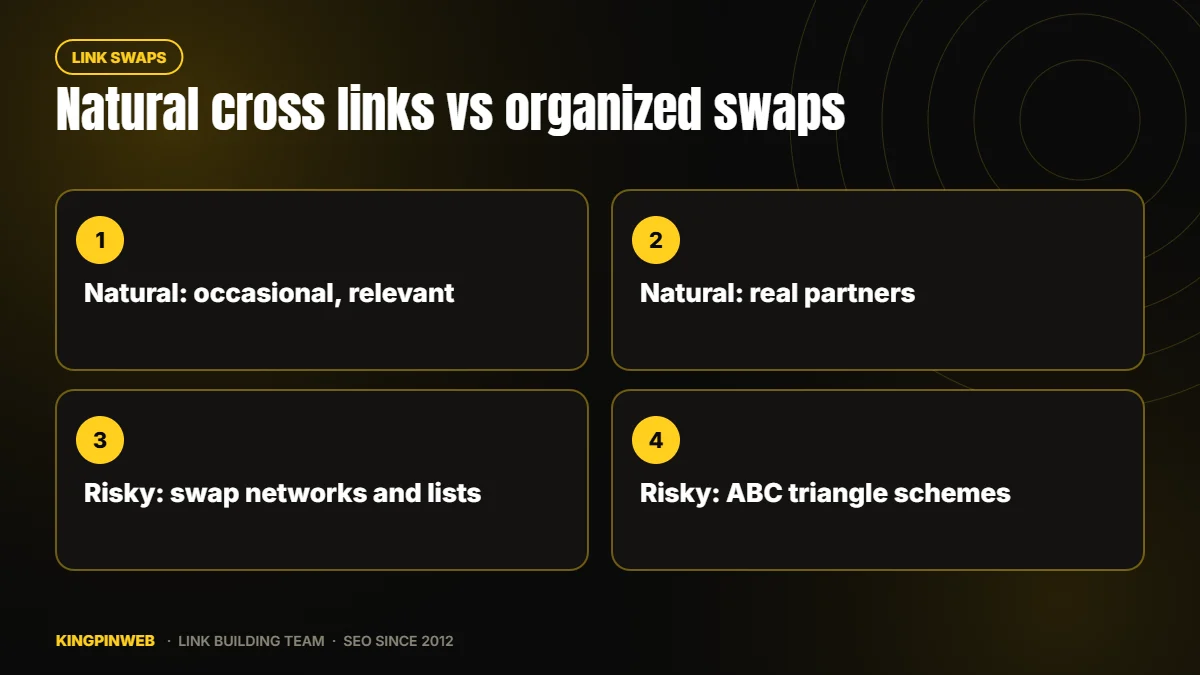
Not every link between two sites is a problem. The difference is intent and scale.
| Natural cross linking | Organized backlink exchange | |
|---|---|---|
| Reason for the link | It helps the reader | It was traded for a link back |
| Partners | Real suppliers, clients, friends in your field | Strangers from a list or platform |
| Frequency | Occasional | Regular, often in batches |
| Relevance | Clear topic or business link | Often unrelated topics |
| Risk | Very low | Ignored at best, manual action at worst |
A web designer linking to a hosting company they use, and getting a mention back on its partners page, is normal. Trading links with forty sites in a group chat every month is not.
The hidden costs of exchanging backlinks
Even when an exchange is not caught, it costs more than it seems.
- You give away your own authority. Every outbound link you place for a swap is a link from your site to a site you did not choose on merit.
- You lose control. A partner site can change hands, turn into a casino or pharma site, or get penalized, and your link sits there pointing at it.
- It takes time. Finding partners, negotiating, checking links and chasing missing ones adds hours every month.
- Links disappear. Partners remove links quietly once they get what they wanted, and you rarely notice.
Are there reputable backlink exchange platforms?
Some platforms present themselves as safe, with quality filters and manual checks. Filters help, but they do not change the basic pattern: a closed pool of sites trading links with each other for rankings. The more members a platform has, the bigger and easier to detect that footprint becomes.
There is also the question of who sees your data. Members share site lists, traffic numbers and target pages with strangers, and any one of them could be a competitor.
If a platform sells itself on volume, treat that as a warning sign rather than a feature. An exchange network that promises hundreds of new links a month is promising hundreds of new footprints too.
Safer alternatives to link swaps
If the goal is more strong links, there are cleaner routes that do not require giving away links from your own site:
- Guest posts and niche edits on real sites with organic traffic, placed one way, with no link back required.
- PBN links on aged auction domains with real backlink history, from a private network you never have to link out to.
- Foundation links to build a natural, varied base under your main links.
- Earned links from content, partners and PR, linked because they help readers.
All of our link building services work one way: links point to your site, and nothing is asked in return. Our network of 10,000+ PBNs never links back to client sites as part of a trade. If you are planning a full campaign, our link building strategy guide shows how to mix these link types.
FAQ
Should you remove old link exchanges from your site?
If they are a handful of relevant partner links, leave them. If you have pages full of swap links to unrelated sites, removing them or adding nofollow is a sensible cleanup.
Is a nofollow link exchange safe?
Nofollow swaps carry little risk, but they also pass little ranking value, so they are mainly useful for referral traffic between genuine partners.
Does linking out to another site hurt your rankings?
No. Linking to useful, relevant sources is normal and can help readers. The problem is only when outbound links are traded at scale for rankings.
Grow your links without trading them
Skip the swaps and get one way links on vetted sites, with every placement reported in an unbranded Excel report. Browse our backlink packages, or talk to our team about a custom plan.
About the author

KINGPINWEB Team
KINGPINWEB is an SEO and link building company based in Chennai, India. Since 2012 our in-house team has helped site owners, agencies and businesses rank higher in search. Everything we publish here comes from hands-on work: campaigns we run, rankings we track every day and tests we carry out ourselves. We write these guides to share what works in practice. Our team is led by co-founders Issac M. Paul and Balaji Ragupathi.
Related reading
 Types of Backlinks and Which Ones Move RankingsRead article
 YouTube Backlinks: Do They Help Your Videos Rank?Read article
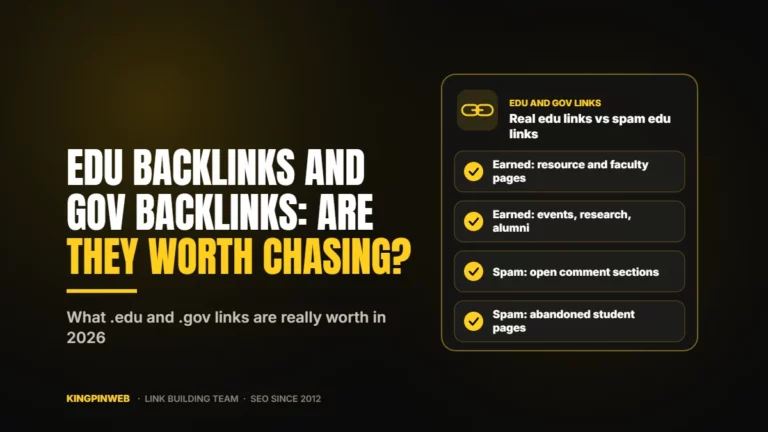 Edu Backlinks and Gov Backlinks: Are They Worth Chasing?Read article
 Link Building for Beginners: Where to StartRead article
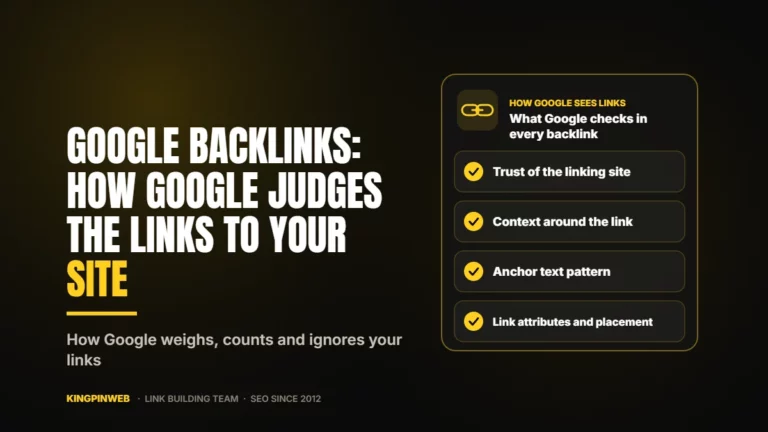 Google Backlinks: How Google Judges the Links to Your SiteRead article
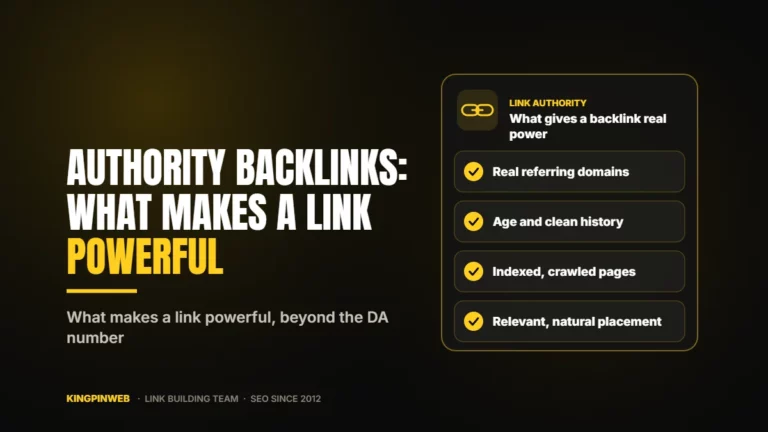 Authority Backlinks: What Makes a Link PowerfulRead article
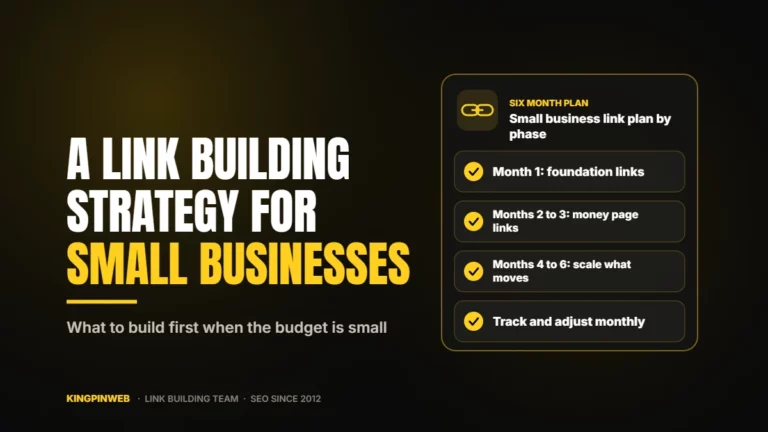 A Link Building Strategy for Small BusinessesRead article
 How to Get Backlinks: Ways That Still Work in 2027Read article
 What Are Backlinks? How They Work and Why They MatterRead article