
At a glance
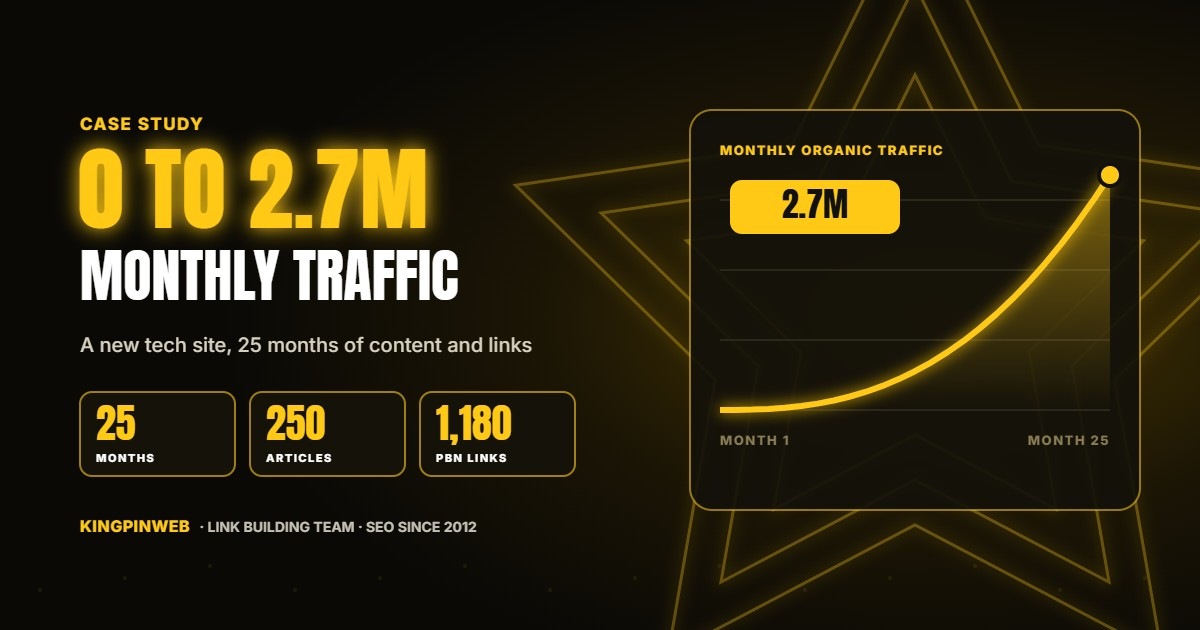
| Result | 0 to 2,710,655 monthly organic visits (Semrush) |
| Timeframe | 25 months (site age at the time: 2 years, 1 month) |
| Niche | Tech |
| Content | 250 handwritten articles (10 per month) |
| Links | 150 foundation links, 1,180 PBN links, 6,900 pillow links |
| Our role | Content writing and link building. The client handled everything else. |
This is the story of a brand-new tech website that went from zero to over 2.7 million monthly organic visits in 25 months. There were no tricks and no shortcuts. It came down to a clear plan, steady content, steady links and a client who executed every month without fail.
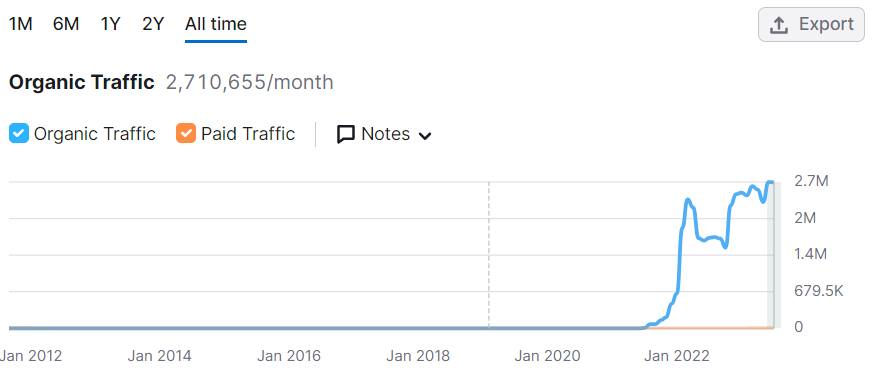
The traffic graph above is from Semrush. The client has asked us not to reveal the domain, but the numbers below are exactly what was built.
The site
- Niche: tech
- CMS: WordPress
- Theme: Kadence WP
- Main plugins: Yoast SEO, Instant Indexing for Google (by Rank Math), Table of Contents Plus, TinyPNG, Akismet, LiteSpeed Cache and a contact form plugin
A light, fast stack. Nothing here is exotic, which is the point: the growth came from content and links, not tools.
Content: 10 articles a month, every month
- 10 articles published every month for 25 months, 250 posts in total
- All written by hand by our in-house team, with no AI and no automated tools
- Every article was planned from keyword research and placed in a silo, so related posts linked to each other
Ten posts a month isn’t a huge volume. What made it work was consistency: the site never skipped a month.
Links: the exact build
| Months | Link type | Target | Total |
|---|---|---|---|
| Month 1 | Foundation links | Homepage | 150 |
| Month 2 | PBN links | Homepage | 30 |
| Months 3–25 | PBN links (5 per new post) | Each month’s 10 posts | 1,150 |
| Months 3–25 | Pillow links (30 per new post) | Each month’s 10 posts | 6,900 |
All links were built manually by our team. The PBN links were tier-one contextual links from our own network. The pillow links (profile, social and other diverse links) gave each post a natural base and diluted the anchor profile.
Why this order matters: foundation links first made the brand look like a real business. Homepage PBN links next built domain authority. Only then did each new post get its own PBN and pillow links, so every page had support from the day it was published.
Fundamentals the client got right
Links and content only work on a solid site. The client handled these, with suggestions from us along the way:
- Keyword research and a content plan
- Silo structure and internal linking
- XML sitemap, Google Analytics and Google Search Console
- E-E-A-T-optimised author bios and About Us page
- Page speed, UI and UX, CDN and image optimisation
- Security hardening (XML-RPC and pingbacks disabled)
- On-page and technical SEO
What we did and what the client did
| KINGPINWEB | Client |
|---|---|
| All content writing (250 articles) | Site build, hosting and design |
| All link building | Technical and on-page SEO |
| Suggestions on fundamentals | Publishing, strategy and consistency |
Key takeaways
- Content velocity and link velocity were the engine. The same number of posts and links every month for two years.
- Anchor text and keyword density were controlled. Pillow links and branded anchors kept the profile natural.
- Quality wasn’t traded for quantity. Handwritten content and hand-built links throughout.
- The client had a plan and stuck to it. This is the part most sites get wrong.
Can you copy this?
The same approach works in most niches, but results depend on competition, site quality and consistency. A tech site with 250 articles is not the same as a local business with 10 pages. If you want a plan for your own site, message us with your niche and goals.
The services used in this case study:
For another long-term example, see how a site went from zero to 4.39 million monthly visits.
About the author

KINGPINWEB Team
KINGPINWEB is an SEO and link building company based in Chennai, India. Since 2012 our in-house team has helped site owners, agencies and businesses rank higher in search. Everything we publish here comes from hands-on work: campaigns we run, rankings we track every day and tests we carry out ourselves. We write these guides to share what works in practice.
Related reading
 How to Test a PBN Link: A Buyer’s Checklist From Live to RankingRead article
  13 PBN Myths That Cost SEOs Rankings (And What Is Actually True)Read article
  PBN Anchor Text: How to Choose Anchors for Your Link OrdersRead article
  PBN Links Case Study (Sep 2026): #75 to #3 in 6 DaysRead article
  Do PBN Links Still Work in 2026? Honest Answer + ProofRead article
  PBN Links 2024 Tests: #41 to #2 (Case Study)Read article
  Why SEOs Still Choose PBN LinksRead article
 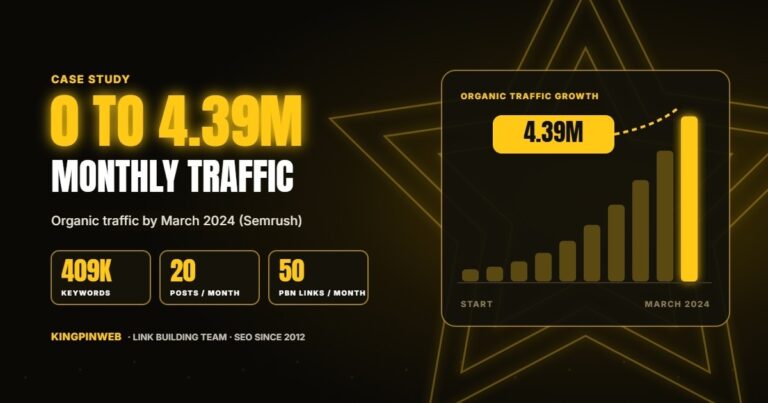 Zero to 4.39M Monthly Traffic: SEO Case StudyRead article
  Expired Domains for SEO: The 2026 GuideRead article