
Key takeaways
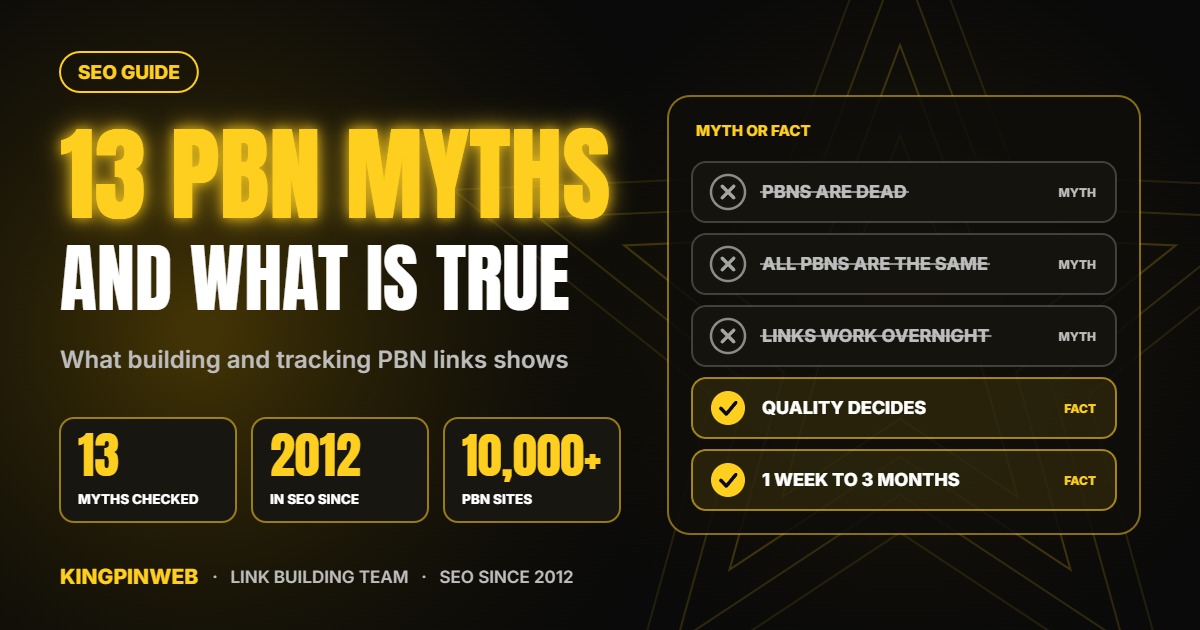
- PBN links are not dead, not illegal and not all the same. Quality decides almost everything.
- Weak PBN links are mostly ignored. Real trouble comes from sloppy networks, obvious footprints and aggressive anchors.
- Results take anywhere from one week to three months, not one night.
- DA and DR are a first filter. Real backlinks, a clean history and indexing tell you far more.
- Good quality PBN links work, and they are where the results come from. The risk comes from cheap, low-quality networks.
Few topics in SEO collect as many confident opinions as private blog networks. Some say PBNs died years ago. Others say they are a guaranteed penalty. Sellers add their own myths to make a weak product sound strong. We have built and tracked PBN links since 2012, so here are the claims we hear most, and what we actually see.
Myths about whether PBN links work
Myth 1: PBNs are dead
What people say: Google killed PBNs long ago and nobody serious uses them.
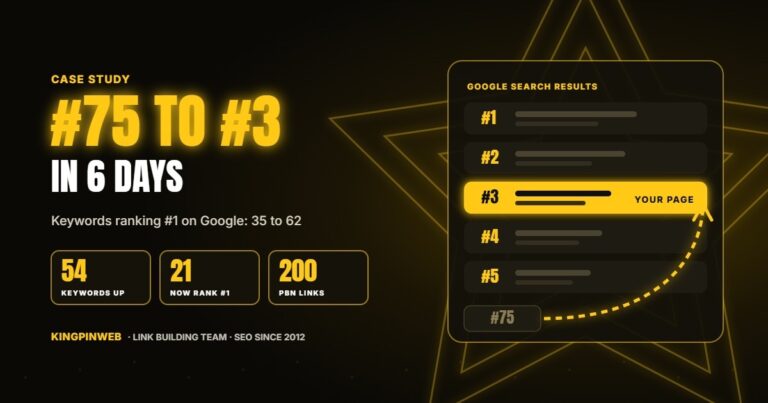
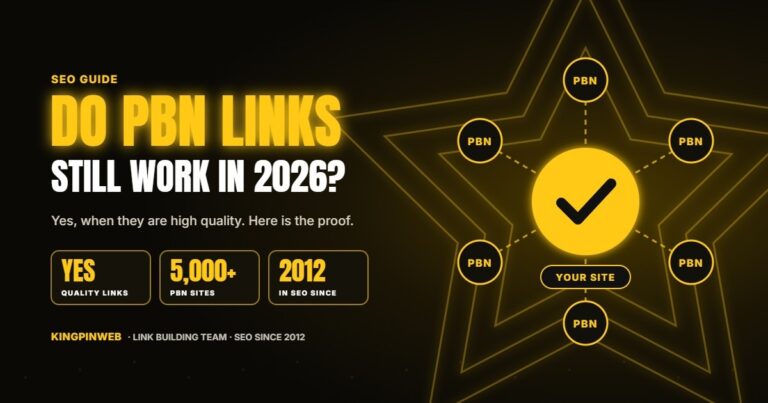
What is true: People have been announcing the death of PBNs for more than ten years. In a survey of 755 link builders by Authority Hacker, 74.3% said they pay for links, so buying links is the norm, not the exception. Our own tracking says the same: in our September 2026 case study a client keyword went from #75 to #3 in six days after our PBN links went live. What died is the cheap, lazy network. See Do PBN links still work in 2026?
Myth 2: PBN links work overnight
What people say: Order today, rank tomorrow.
What is true: Sometimes a keyword moves within days. More often it takes longer. Expect anywhere from one week to three months. Link velocity matters, and your overall fundamentals and other factors also come into play. Anyone promising overnight rankings is selling a story.
Myth 3: You need hundreds of PBN links
What people say: Rankings are a numbers game, so buy as many as you can.
What is true: A handful of strong, relevant links usually does more than hundreds of weak ones. More links also mean more anchors to manage and a faster pace to explain. We would rather see a steady monthly flow of quality links than one giant order.
Myth 4: Once your post leaves the homepage, the link is dead
What people say: A PBN link only counts while the post is on the front page of the blog.
What is true: A homepage placement is the strongest spot on a site, which is why we also offer monthly rental sticky homepage links. But a permanent post does not vanish when it moves down. It stays live as its own page on the site, still indexed and still linked from the blog’s archives. Our standard PBN links are permanent for exactly this reason.
Myths about risk
Myth 5: PBN links always get you penalised
What people say: Use one PBN link and your site is finished.
What is true: In most cases a link that search engines do not trust is simply ignored. You lose the money, not the site. Real penalties are rare and nearly always follow the same pattern: a public or badly built network, the same keyword anchor on every link, and a sudden flood of links. The risk comes from cheap, low-quality links. Good quality PBN links, used with sensible anchors at a steady pace, are the ones that move rankings.
Myth 6: Google can spot every PBN (or none of them)
What people say: Either the algorithm sees everything, or a network is invisible if you hide it well.
What is true: Both versions are wrong. Networks get caught through patterns: the same hosting or IP range, the same theme on every site, matching ownership details, shared tracking codes, sites that link to each other, and thin posts that all link out to unrelated businesses. A network that looks and behaves like a set of independent, real websites gives off none of those signals. Detection keeps improving, which is why building standards have to keep rising too.
Myth 7: PBNs are illegal
What people say: Buying PBN links is against the law.
What is true: It is not. No law forbids owning websites or linking from them. Search engines discourage paid links of every kind, whether it is a PBN link, a sponsored guest post or a niche edit, but that is a guideline, not a law. What matters in practice is quality: cheap, low-quality links are the ones that get spotted and ignored, and good quality links are the ones that count.
Myth 8: Footprints do not matter any more
What people say: Nobody checks hosting and themes these days.
What is true: Footprints are still the main way networks fall. Hosting, IPs, themes, plugins, registration details, analytics IDs and outbound link patterns can all tie sites together. This is why we use unique hosting, IPs and themes across our network and keep the site list private.
Myths about quality
Myth 9: All PBNs are the same, so buy the cheapest
What people say: A PBN link is a PBN link.
What is true: A good PBN site has real costs: an aged auction domain with clean backlinks, proper hosting, handwritten content and ongoing maintenance. A link priced at a few dollars cannot cover those costs, so something has been skipped. Usually it is the domain. We explain what to look for in Why SEOs still choose PBN links.
Myth 10: DA or DR tells you everything
What people say: High DA means a strong link.
What is true: DA and DR are third-party scores, and they can be inflated. They are useful as a first filter and nothing more. Look at what sits behind the number: real referring domains, the history of the domain, whether its pages are indexed and how many sites it links out to. Our baseline is Moz DA 20+ with 50+ referring domains, and every domain is toxicity-tested before use.
Myth 11: Expired domains keep all their power forever
What people say: Any domain with old backlinks is a goldmine.
What is true: A domain is only as strong as the links that still point to it and the history behind it. Links disappear over time, and a domain that was used for spam carries that past with it. Vetting is everything. Our guide to expired domains for SEO has the full checklist.
Myth 12: Relevance does not matter: a link is a link
What people say: A strong domain helps any site, whatever its topic.
What is true: An unrelated link can still pass some power, but a link from a related site carries more weight and looks natural. Twenty links to a dental clinic from blogs about gaming, golf and car parts form a pattern no real site has. With 10,000+ sites in our network we can match niche and topic for most orders.
Myth 13: PBN links are always better (or always worse) than guest posts
What people say: Pick one side.
What is true: They do different jobs, and the strongest campaigns use both.
| PBN links | Guest posts | |
|---|---|---|
| Control over anchor and target page | Full | Limited, the publisher decides |
| Speed | Live in days | Weeks of outreach |
| Cost per link | Lower | Higher |
| Placement | Homepage or post on an aged domain | An article on a real publication |
| Best for | Pushing specific pages and keywords | Brand, variety and referral traffic |
How to tell a myth from a fact: test it
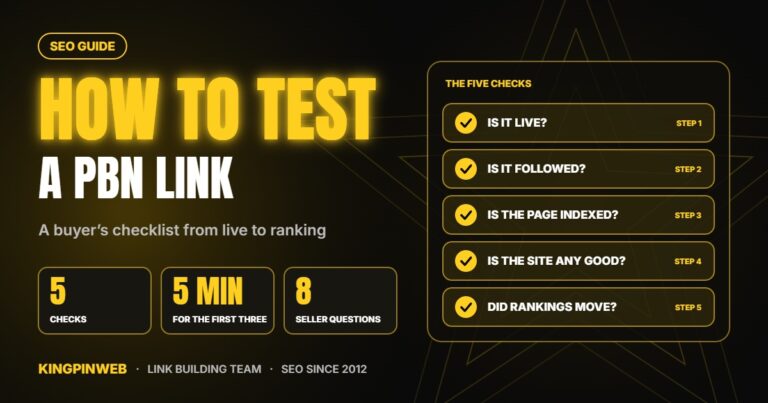
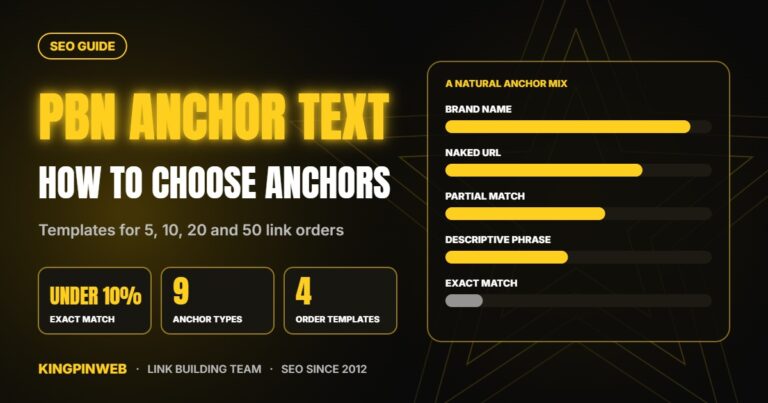
Every claim in this article can be checked on your own site. Track a few keywords, add links to one page and not to another, wait, and compare. We explain the method step by step in how to test a PBN link. For choosing anchors, see our PBN anchor text guide.
The bottom line
Good quality PBN links work, and our client data shows it. The risk comes from the other end of the market: cheap domains, thin content, shared footprints and the same keyword anchor on every link. Those links waste money and cause the problems people warn about. They suit site owners and agencies who want control over anchors, target pages and timing, and who are willing to pay for quality. They do not suit anyone looking for the cheapest link they can find.
FAQ
Do PBNs still work in 2026?
Yes, when the network is built on strong aged domains with real content and no shared footprints. Cheap public networks mostly do nothing.
Are PBNs illegal?
No. No law forbids them. Search engines discourage paid links of any kind, but that is a guideline and not a legal matter.
Can PBN links hurt my site?
Not when they are good quality and used sensibly. Low-quality links are usually just ignored, and the problems people report come from bad networks combined with repeated keyword anchors and sudden bursts of links.
How long do PBN links take to work?
Anywhere from one week to three months, depending on link velocity, competition and how strong your page already is.
Is DA important when buying PBN links?
It is a starting filter. Real referring domains, a clean history and indexing matter more.
Are PBN links better than guest posts?
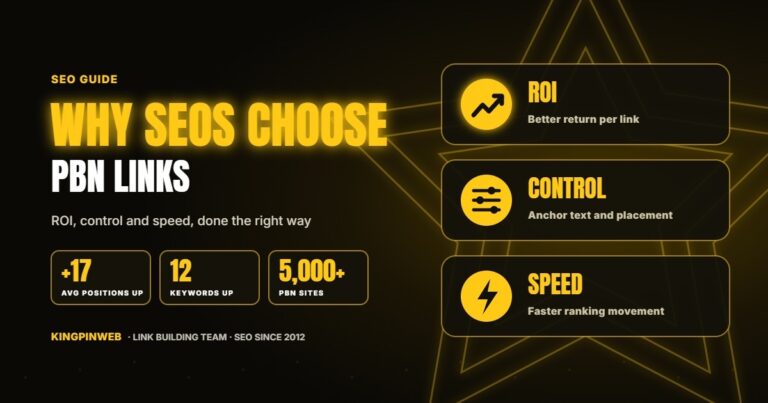
Neither is better in every case. PBN links give control and speed, guest posts give variety and brand exposure. Most strong link profiles have both.
How many PBN links do I need?
It depends on the keyword. Start with a small order to a page that already ranks on pages one to three, track it, and build at a steady monthly pace.
Order PBN links
- POWERFUL PBN Links That Work: our most popular PBN service
- The Strongest PBN Links on the Planet: highest-authority domains for tough keywords
- Monthly Rental Sticky Homepage PBN Links: homepage placements
Want a mix? We also offer guest posts and niche edits. Questions before you order? Message us and we’ll help you plan the right mix for your site.
About the author

KINGPINWEB Team
KINGPINWEB is an SEO and link building company based in Chennai, India. Since 2012 our in-house team has helped site owners, agencies and businesses rank higher in search. Everything we publish here comes from hands-on work: campaigns we run, rankings we track every day and tests we carry out ourselves. We write these guides to share what works in practice.
Related reading
 How to Test a PBN Link: A Buyer’s Checklist From Live to RankingRead article
  PBN Anchor Text: How to Choose Anchors for Your Link OrdersRead article
  PBN Links Case Study (Sep 2026): #75 to #3 in 6 DaysRead article
  Do PBN Links Still Work in 2026? Honest Answer + ProofRead article
  Zero to 2.7M Monthly Traffic in 25 Months (Case Study)Read article
  PBN Links 2024 Tests: #41 to #2 (Case Study)Read article
  Why SEOs Still Choose PBN LinksRead article
 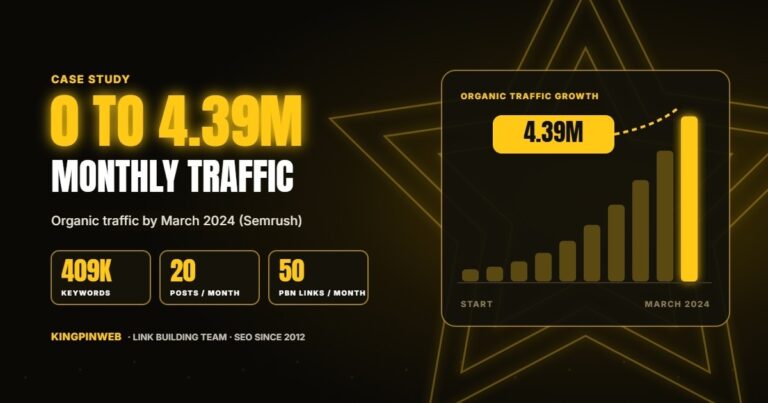 Zero to 4.39M Monthly Traffic: SEO Case StudyRead article
 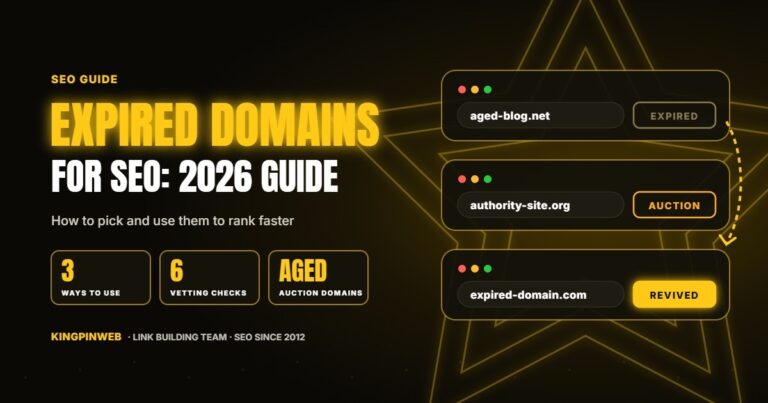 Expired Domains for SEO: The 2026 GuideRead article